


The farther backward you can look, the farther forward you can see." ~Winston Churchill The Great...
If you’re not using email marketing campaigns to promote what you sell, you’re leaving money on the table.
Want some proof?
This year, email marketing’s ROI averages a massive $36 to $42 per $1 spent (rising as high as $45+ in e-commerce), easily outperforming paid search, display ads, and social media advertising combined.
So why are you ignoring your email marketing?
What's that?
There are flashier ways to market in today’s landscape?
Such as?
Lookey here; with third-party cookies completely dead and privacy-tracking updates continuously limiting traditional ad targeting, you would be hard-pressed to find a marketing medium with the absolute control and ROI of email marketing. In a world of volatile social media algorithms, email is a direct asset that you own.
The good thing about email marketing is that it is a known entity that has been supercharged by AI, machine learning, and dynamic interactivity—if you just use a little creativity, which may mean you bring in a fresh set of eyes to help make that happen.

Another benefit of email marketing is that it's affordable, and everyone you would want to reach has at least one email address they check multiple times a day.
Can the same be said for TikTok or the latest trendy app?
Since recent cycles, big social media platforms have continuously shifted their algorithms overnight, dropping organic reach to near zero and driving users away due to constant policy adjustments.
This has led to a proliferation of alternative platforms and a lot of people choosing to disconnect from traditional networks for personal reasons, including what they perceive to be a crisis of conscience.
How can you leverage this as a professional salesperson, sales manager, business owner, and entrepreneur?
How can you get the word out to your ideal prospects via email marketing in this crazy, noisy, AI-saturated world today?
Remember, successful email marketing means more than simply sending an email.
Your emails must reach the inbox vs. the spam box (which requires strict sender authentication like DMARC).
Then your emails must get opened.
Then, your emails must get clicked (or interacted with right inside the inbox).
Then, your prospects must take the desired action once they follow that click, i.e., book an appointment, download an additional report, or even buy from you.
How can you make that happen?
Read on...
First Things First: The Rule of Relevance
How does Google make money?
This is not a trick question.
When I ask this in my live sales training, I get various answers that come close, but the detailed answer is that Google makes money by delivering relevant content at the moment of relevance.
What I mean by that is that when you do a search for iPhone cases, you aren't shown ads for hair extensions or organic dog food or how to get your private pilot's license.
Google delivers relevant ads, i.e., iPhone cases, maybe iPhone chargers, and maybe Samsung phones if Samsung wants to run some tests on getting iPhone users to switch, at the moment you search for iPhone cases.
In the world of email marketing, this means list segmentation.
For example, my home remodeling client here in Lake Elsinore, CA, has a list of prospects who inquired about kitchen remodels. They are different from those interested in flooring, bathroom remodeling, closets, and window coverings.
Those lists can also be broken down into:
- New customers
- Past customers, i.e., those who had work done more than 12 months ago
- Prospects
- Qualified
- Unqualified
- New
- Hot
- Lost/old/cold
- Referrals provided
- Primary residence work done
- Rental unit work done
Segmentation and personalization are the names of the game in email marketing, and most marketing, really.
When you're smart and focused on doing email marketing correctly, you can make this happen, which means you can make big profits happen.
Then you can take things a step further and begin collecting and leveraging additional information on your prospects and clients, such as:
- Age
- Education
- Gender
- Income
- Etc.
You can turn almost any data into actionable information to create profitable email marketing campaigns when you focus on it.
When you throw AI and machine learning into the mix, watch out.
As we operate today, standard segmentation is just the baseline. There are AI tools out there now that can find micro-behavioral patterns so precise that your email segmentation will be nearly 1-to-1, giving you the ability to achieve true hyper-personalization with your emails.
This will not only save your data analysts time and effort, but it will also dramatically improve your email marketing ROI.
Now, let’s move on to the actual trends now.
The Email Marketing Trends-to-Staples You Need to Know Everything About
Trends come and go, so let's look at the foundational components of email marketing that are becoming essential to your email marketing success.
Shedding Light on Dark Mode & "Intelligent Inboxes"
Dark mode is how I view Reddit, X, and Facebook on all of my screens, from my iPhone to my iPad to my MacBook Pro to my iMac.
Most apps offer this display feature because it’s better for our eyes, making dark mode a default preference for the vast majority of users.
So how good are you at optimizing your email marketing for mobile?
( Source )
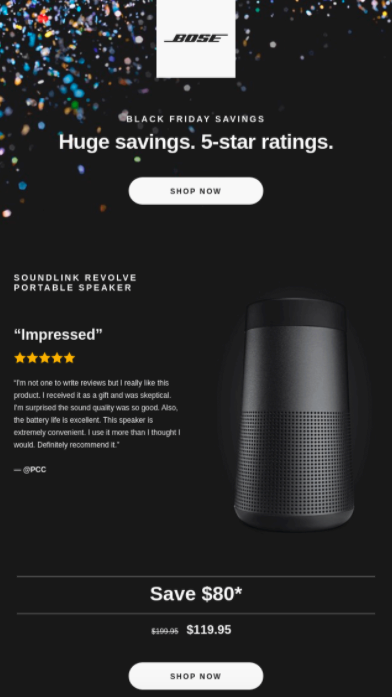
The graph above shows the email opens by device in the US.
As you can see, focusing your email marketing on the desktop first is a losing strategy.
It also follows that as email opens dominate on mobile devices, purchases on mobile devices follow, especially since a prospect’s impulsive behavior is deeply rooted in mobile email marketing strategies.
In first place, with a dominant conversion rate, sales emails opened and clicked on mobile translate into billions in global retail sales.
Email conversion rates on mobile systematically outperform traditional discovery channels during peak seasonal sales scripts.
This result isn’t surprising since subscriber lists consist of users who are already customers or primed prospects who already have greater conversion capability. Furthermore, inbox providers use intelligent, AI-driven sorting systems as gatekeepers—if your layout code isn't clean or optimized for the shadows, your emails get buried. Therefore, mobile and dark mode optimization are no longer a choice.
Apart from being better for the eyes, dark mode is also a power-saver when it comes to your device’s battery life, so your emails will be something a prospect can open and keep open with less concern about draining their batteries.
Here's an example of an email optimized for “dark mode”:
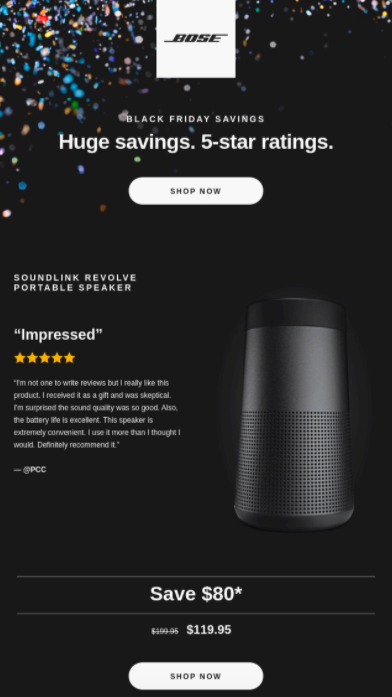
While I'm a big fan of the written word (need some copywriting assistance?), a good image or dynamic graphic can bump up interactions.
For dark mode email images, reverse the colors and create a black background that is minimal, sophisticated, and, more importantly, easier on the eyes of your prospects. Ensure your graphics have transparent backgrounds so text doesn't vanish when a system flips themes.
Any decent email platform/CRM should give you the ability to preview your emails on various screen sizes.
I use both Keap and HubSpot as a partner of both platforms, and they both have this feature.
Be Conversational & Interactive Because Attention Spans Are Short
Various studies show that email recipients don’t really pay attention to long blocks of text nowadays (mainly because most copywriting reads like generic, uninspired AI fluff, but I digress...) (need some copywriting assistance?).
To stand out, emails need to be short, snackable, and conversational. Furthermore, interactive email elements have become standard practice. Instead of forcing a user to click away to a external landing page, modern emails embed live polls, product carousels, or feedback sliders right inside the inbox to increase compliance.
The main thing to keep in mind here with your email marketing strategy is that we are trying to get the attention of the prospect so they will take our desired action.
Including an interactive visual element or an in-box micro-action will help make that happen.
Your prospects are busy...either at work or at avoiding work...so make it easy and obvious in the email what actions you want them to take because...
If there is no clear call to action, there will be no action taken."
This is my own design that drives readers to take my interactive CRM selection quiz.
The skimmers, the know-it-alls, and the impatient ones who will not concentrate on a long form engage beautifully with interactive elements.
Be brave enough to have fun with your prospects.
We live in the world of "edutainment" today.
You must educate while you inform while you entertain your prospects with everything you do, especially email marketing.
Show your prospects how your products are used and how they can change their lives, because we don’t shop for raw items anymore. We shop for something that can make us better, more efficient, stronger, and do it all with less effort.
So showcase how your stuff will do exactly that, and watch the sales roll in.
Serve Through The Sale
Well done.
You got the sale.
Do you pack your bags and get out of town...or do you stick around to ensure the sale sticks?
Professional salespeople and entrepreneurs know that with the cost of customer acquisition skyrocketing, what happens AFTER the prospect gives you their money makes all the difference in sustainability.
A sale is not the end of the conversation.
On the contrary, it’s an invitation for deeper brand storytelling, education, and loyalty metrics.
If you’re selling something that can be combined with another product or service, use automated post-purchase sequences to ask for feedback, provide value-added tips, and introduce highly tailored up-sell opportunities based on their actual purchase history, or make an introduction to an affiliate of yours who can help them.
(See related article on affiliate marketing or become an affiliate of The Sales Whisperer® and earn while you learn.)

An email like the one above can help your prospects love your brand even more.
It shows that you care enough to ask if everything was alright.
And with the right automated workflow, you can seamlessly turn a transaction into a long-term brand advocate.
Be Minimal
Remember, far more people are reading your emails on their phones or tablets than on their laptops or desktops, so less is more.
Minimalist design is the way to go for four distinct reasons:
- It’s clean and easy on the eyes.
- It keeps the reader focused without overloading them with competing colors.
- It is significantly more accessible for smart inbox screening tools.
- It ensures light code weight so it loads instantly over cellular connections.

( Source )
Casper’s email is just that. Clean, minimalistic, with a relevant image and direct, intentional copy.
Going minimal in your emails has the added benefit of enabling you to appeal to a wider audience.
Fewer distractions mean fewer things for the recipient to balance, which is a structural win.
Just keep in mind that minimal doesn’t mean plain or dumbed down.
You need clean, bold lines and a design layout that makes sense instantly. Lots of whitespace to let the eyes rest, clean typography, and CTA buttons with contrasting colors that pull the eye straight to the click are exactly what you need.
Be Genuine
This is not a fad.
Sure, some companies pay lip service to transparency, but raw authenticity stands out like a beacon in an era flooded with cold, automated text blocks.
People don't connect with corporate logos; they connect with real stories and real human faces.
Strive for an actual, serious connection with your audience. The only way to do that is through very strong brand storytelling.
Incorporate pieces of your history, actual behind-the-scenes milestones, and transparent user-generated content (UGC) into your email updates.
Storytelling remains one of the best marketing strategies because it anchors raw metrics to human memory. When your audience can link your values to an authentic narrative, they don't just stay subscribed—they reply, engage, and convert.
In Conclusion
Email marketing has evolved into the ultimate owned asset. While third-party social algorithms shift overnight and search behaviors change with the rise of AI search engines, your list gives you direct, controlled access to your audience.
So, go ahead, A/B test your designs, lean heavily on behavior-triggered automation, and put your new knowledge to the test.
In today's landscape, email marketing continues to generate an unmatched return of **$36 to $42 for every $1 spent**, completely eclipsing standard paid networks. Below, we've refreshed the baseline numbers to show you exactly how powerful this asset remains today.

Email Marketing Stats (2026 Highlights)
- There are an estimated 4.73 billion email users globally, representing more than half of the world's population.
- Over 376 billion emails are sent and received every single day.
- Email marketing continues to bring in an average return of $36 to $42 for every $1 spent ($45+ in specialized e-commerce).
- Welcome email automations achieve an astounding average open rate of 83.6%, making them your highest-performing text assets.
- Marketers leveraging behavior-triggered segmentation notice revenue growth trajectories up to 760% higher than unsegmented lists.
- Over 65% of modern brands actively integrate AI tools to optimize deployment times and personalize copy variants.
- Abandoned cart email sequences maintain open rates over 50% and successfully recover 3% to 5% of otherwise lost revenue.
- Stricter security updates (such as mandatory DMARC alignment enforced by Google and Yahoo) mean technical domain authentication is entirely non-negotiable for baseline deliverability.
- Over 60% of consumers check their inbox first thing in the morning before interacting with any alternative digital channel.
- Baby Boomers, Gen X, and Millennials consistently rank email as the most personal and preferred channel to receive brand communications.
Market like you mean it.
Now go sell something.