


2026 Update From Wes The tools changed. The platforms got new names, new features, and new prices....
2026 Update From Wes
Infusionsoft became Keap, and Keap is now part of Thryv. The name changed, and so did the owner. Why most owners struggle with it never changed: they bought the tool before they wrote down the process. Keep reading, and see the note at the bottom.
HubSpot vs. Keap Is Really Apples & Oranges...
I've used Keap since 2008 to grow my business, and I moved this entire website onto HubSpot after seven years on WordPress. So I've lived inside both.
Both companies ship updates constantly. Any list of "new features" I write today is stale in six months, so this post sticks to what doesn't change: what each platform is built to do, and who it fits.
HubSpot vs. Keap For Current Users
If you own either of these platforms already and are only nibbling around the edges, stop reading now and commit to learning and mastering what you already own.
Switching software rarely fixes a problem that lives in your process.
At the end of the day...
You're a busy entrepreneur with Bright-Shiny-Object syndrome, so here's my (almost) unbiased take:
You need more of the right traffic, which you attract by creating great content with great offers that turn window-shoppers into qualified leads you can then nurture, bond with, and sell to, then over-deliver so you earn testimonials and referrals.
But ultimately, you need more sales.
Sure, traffic is a component of sales, but if you have a crappy site, crappier calls to action, and crappy follow-up, you won't be in business long.
HubSpot's main emphasis is on "inbound marketing," which I love and support 100%, and it's how I built The Sales Whisperer®.
What put me off HubSpot for years was paying a lot every year, up front, for help I thought I could get elsewhere. But with its free CRM and tools, HubSpot now makes sense for much smaller companies.
I am not a "techie" or "coder," but at age 39, while holding down a full-time job, building my company, raising six (now seven) children with my wife, and coaching Little League and soccer, I taught myself WordPress and built a site with more than a thousand posts.
This site later moved to HubSpot, where you are reading it now.
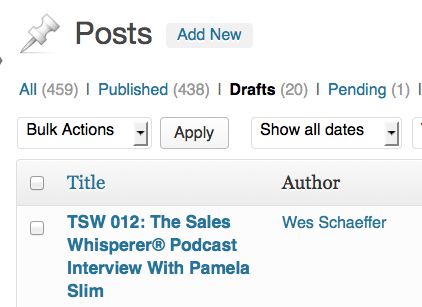
The Sales Whisperer® blog before moving to HubSpot after seven years on WordPress. See HubSpot vs. WordPress.
Eventually, you get tired of adding "free" and "low-cost plugins" from people selling "GUARANTEED LIFE HACKS," "blogging hacks," and "e-commerce hacks."
Sure, some of the tools work as advertised, but who supports them?
What does a slow site cost you in bounce rates, time on site, and conversions?
What does it cost you when one plugin update conflicts with another and turns your website into a white page of nothingness? (I did that more times than I care to admit.)
I'm all for bootstrapping. It's how I launched The Sales Whisperer® in 2006. But you get what you pay for.
(Seeing all of HubSpot's free keyword ideas kinda reminds me of Steve Martin in "The Jerk" when he saw his name in the phone book. I'm somebody now!)
Affordable Inbound Marketing is the name of the game.
Affordability: There is the price you pay to buy HubSpot or Keap, and there is the price you pay to own them. See HubSpot vs. Keap: True Total Cost of Ownership.
Just because a tool offers a free trial or waives a setup fee doesn't mean it's cheaper to own and operate.
Both now follow the same playbook: start free, add a module or a user as you get comfortable, then step up to a full package once you have clear, documented, proven processes in place.
Plans and prices change often, so check both sites for current numbers.
E-Commerce: Keap has a built-in shopping cart. It's not best-in-class, but it's functional, and I've run my own business on it for years. HubSpot leans on integrations with platforms like Shopify for e-commerce.
Automation: HubSpot builds automation with Workflows. Keap uses its visual Campaign Builder, which many people find more intuitive at first.
Both offer internal workflows to make your staff more efficient, plus marketing automation to keep you in front of your prospects.
The difficulty people have when setting up HubSpot or Keap is not the software. It's the thinking that goes into mapping out their ideal process.
Keap ties your email marketing, shopping cart, CRM, affiliate tracking, and direct mail together in one place. With HubSpot, you'll add a few third-party tools for payments or affiliates.
Otherwise, HubSpot does what Keap does with a more polished interface and a faster platform. (See "HubSpot vs. Keap: Which CRM Is Fastest?")
In conclusion...
Both platforms offer great business-building tools with different strengths:
- HubSpot focuses on the top of the funnel by giving you frameworks for your website, blog, and social content. But you still have to write the content. It also gives you great analytics, polished email templates, split-testing, and superb training.
- Keap offers sales and marketing automation that includes CRM, email marketing, e-commerce, and affiliate tracking under one roof, with good training and support.
When it comes to speed and polish, HubSpot wins. When it comes to an all-in-one cart and campaign builder for a small team, Keap has long held its own.
If you're still unsure which is right for you, see my picks for the best CRMs or book a time with me.
Why the CRM Didn't Fix It
I've used Salesforce since 2004, Keap since 2008, and HubSpot and Ontraport since 2014. Every tool on this page works. Plenty of owners still give up on it.
The tool was never the problem. A shiny CRM with no written process is just expensive dashboardery. Write down how a stranger becomes a customer first. Then pick the software that fits that process.
Get a process before you get the software →
Market like you mean it.
Now go sell something.
Want a sounding board while you fix it?
12 Weeks To Peak™ is 84 days of private coaching with me covering business, faith, family, fitness, and finance. I show up, I listen, and I tell you the truth.
Not ready for private coaching? Join the Inner Circle.
Would you rather have it built for you? Meet Hank.