
2026 Update From Wes Infusionsoft became Keap, and Keap is now part of Thryv. The software changed...
2026 Update From Wes
Infusionsoft became Keap, and Keap is now part of Thryv. The software changed its name three times. Why most owners struggle with it never changed: they bought the tool before they wrote down the process. Keep reading, and see the note at the bottom.
Table of Contents
- Process Before Login
- Three Ways To Build Keap Email Templates
- Add Products and Get Paid In Keap
- The All About Spelling Story
- The Real Lesson: Follow-Up
- Why the CRM Didn't Fix It
Process Before Login
I wrote the first version of this post on December 28, 2009. I've updated it many times since.
In all those years, one thing never changed. The owners who mastered Keap had a written sales, marketing, referral, and testimonial process before they ever logged in.
The owners who struggled were hoping the software would hand them a process.
It won't. No CRM will.
So the key to Keap mastery is not a feature. It's a legal pad and one honest afternoon.
If you want my long-form take on the software itself, read my Keap CRM review.
Before You Buy Anything
Keap, Thryv, HubSpot, Salesforce. The name on the login screen does not matter. The software runs your follow-up process, and it will never write that process for you.
Three Ways To Build Keap Email Templates
Once you know what you want to say, and when, Keap gives you a few ways to build the emails:
- Code Builder (HTML Builder)—Good if you have an existing email template from another program or a custom look you want to create. Drop in your raw HTML or build it from scratch.
- Classic Builder—If you're not a coder and want to work as if you were in a Microsoft Word document.
- The Drag & Drop Email Builder—Widgets you drag and drop wherever you want them, such as photos, HTML code, YouTube clips, and social media buttons.
Add Products and Get Paid In Keap
- Add the product.
- Name your product inside Keap.
- Manage it.
- Grab the link and send it to your client. It is automatically tied to your Keap shopping cart, which is tied to your merchant account, which is tied to your bank account.
The All About Spelling Story
Back in 2008, the company then called Infusionsoft ran a contest that made a famous case study.
Greg and Marie Rippel were classic small business owners. They grew tired of the rat race, moved from Chicago to Eagle River, Wisconsin, and started their own business, All About Spelling, selling a multi-sensory spelling program to teachers and home-school parents.
Like most small business owners, they soon found themselves in the small business whirlwind, fighting for time, energy, and growth.
On April 28, 2008, they got the call: they had won the company's "Double Your Sales" contest. The prize was a year of the software and help from its marketing team.
Before the contest, despite more than 5,000 names in their database and a monthly newsletter, they failed to:
- Capture leads from their website (except through a newsletter sign-up)
- Segment their leads
- Promote their products with follow-up sequences
- Nurture customers by building a personal relationship
- Use a referral system
- Upsell products on their website
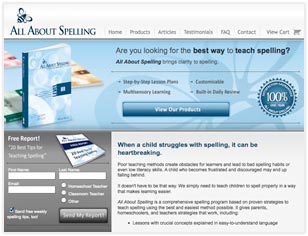
They had a great product, raving testimonials, and fantastic customer service. Greg and Marie even took the time to speak directly with customers and prospects.
But without a follow-up plan, prospects weren't taking the final step. Existing customers drifted away. Repeat business was dropping off by half from one product to the next.
And the Rippels were overwhelmed, hand-writing letters, manually sending emails, packing their own products, and juggling multiple systems.
According to the published case study, within three months their sales were up 149%, their contact list grew from 5,863 to 10,632, purchases went from 599 to 1,232, and the average order grew 16%.
The Real Lesson: Follow-Up
Here's what most people missed when they read that story.
The Rippels didn't win because of a feature. They won because, for the first time, they wrote down who should hear from them, what they should hear, and when, and then they let the software carry it.
They fixed the most common small business failure of all: the lack of follow-up.
The software was the wheelbarrow. The process was the load.
Keap is not a magic solution. It's a very good way to run a follow-up process you've already written down.
Why the CRM Didn't Fix It
I've used Salesforce since 2004, Keap since 2008, and HubSpot and Ontraport since 2014. Every tool on this page works. Plenty of owners still give up on it.
The tool was never the problem. A shiny CRM with no written process is just expensive dashboardery. Write down how a stranger becomes a customer first. Then pick the software that fits that process.
When you are ready to compare your options side by side, start with my guide to the best CRMs.
Market like you mean it.
Now go sell something.
Want a sounding board while you fix it?
12 Weeks To Peak™ is 84 days of private coaching with me covering business, faith, family, fitness, and finance. I show up, I listen, and I tell you the truth.
Not ready for private coaching? Join the Inner Circle.
Would you rather have it built for you? Meet Hank.