
[ LISTEN ON APPLE PODCASTS OR SPOTIFY ] People have called SEO dead since 2007. As long as people...
Revenue Enhancement Specialist.
Customer Success Evangelist.
Business Development Ninja.
Growth Hacker.
Client Acquisition Guru.
Customer Journey Architect.
I've seen them all on LinkedIn, and I bet you have too.
Every one of those titles is a grown adult standing in a crowded room, pointing at somebody else, and whispering, "I'm not one of those people."
You know who "those people" are. Salespeople.
Here's the problem. When you're ashamed of what you do, your prospects can smell it.
Shame makes you hedge. It makes you apologize for calling. It makes you "just checking in" instead of asking for the business.
And it makes you hide behind a title that sounds like a Star Wars side character instead of owning the most important job in any company.
So let's clear this up once and for all.
Nothing Happens Until Somebody Sells Something
That old line, often credited to IBM's Thomas Watson Sr., is still true today. The engineer doesn't get a paycheck, the warehouse doesn't ship a box, and the accountant has nothing to count until a salesperson convinces a human being to trade money for value.
Robert Louis Stevenson said it more than a century ago: "Everybody lives by selling something."
The doctor sells you on changing your diet. The pastor sells you on showing up Sunday. The parent sells the kid on eating broccoli.
The only question is whether you'll do it well, on purpose, and with pride...or badly, by accident, and with shame.

Before You Do Anything Else
Doing sales well and on purpose starts with a plan on paper. Write down how you find, qualify, and close a buyer before you change your title, your pitch, or your software.
To Sell Is to Serve
Since Day One of The Sales Whisperer®, I've taught what my sales mentor, Steve Clark, taught me back in 2006: selling is a calling.
Like a doctor, a good salesperson diagnoses before prescribing. You ask questions. You listen. You find the pain. Then, and only then, you recommend a solution...and sometimes that solution isn't yours.
That's service.
Zig Ziglar built an entire career on this idea, and he said it better than anyone:
"You can have everything in life you want, if you will just help enough other people get what they want."
—Zig Ziglar
Read that again. Zig didn't say "if you close hard enough." He didn't say "if you overcome every objection."
He said help. Zig also said, "Stop selling. Start helping." The irony is that the salespeople who take that to heart end up selling more than anybody.
And because Zig never let us off the hook, he also said, "Timid salesmen have skinny kids."
Service is not the same as being soft. If you truly believe your product will make your customer's life better, then letting them walk away without it isn't polite.
It's a disservice. You're leaving them stuck with their problem so you can avoid feeling awkward for thirty seconds.
My friend Ben Gay III, who coached Zig himself, talked about this on The Sales Podcast. The greats weren't timid. They were convinced. There's a difference.
Some of the Greatest People in Business Came From Sales
Still think sales is a dead-end job for people who couldn't get a "real" one? Look at who started there.
Ray Kroc (McDonald's)
Before he built the biggest restaurant brand on earth, Ray Kroc sold paper cups and then Multimixer milkshake machines. He drove out to San Bernardino because one little burger stand kept ordering more mixers than anybody else. That little stand was run by the McDonald brothers. A salesman's curiosity turned into an empire.
Sara Blakely (Spanx)
Sara Blakely sold fax machines door-to-door for seven years. She's said the rejection she faced cold calling is what made her fearless enough to launch Spanx with $5,000 in savings. She became the youngest self-made female billionaire in the world. Fax machines, people.
Howard Schultz (Starbucks)
Howard Schultz sold for Xerox, then ran U.S. sales for Hammarplast, a Swedish housewares company. He noticed a small Seattle outfit buying an unusual number of drip coffee makers and flew out to see why. That company was Starbucks.
Anne Mulcahy (Xerox)
Anne Mulcahy joined Xerox in 1976 as a field sales rep. Twenty-five years later she was the CEO, and she's widely credited with pulling the company back from the edge of bankruptcy. She knew the customers because she'd sat across the desk from them.
Marc Benioff (Salesforce)
Marc Benioff spent 13 years at Oracle and became one of its youngest vice presidents by selling. Then he started a little company whose entire purpose is to help salespeople sell. I've used Salesforce since 2004, so I'm grateful he never got a fancier title.
Warren Buffett (Berkshire Hathaway)
After Columbia, the Oracle of Omaha went to work selling securities at his father's brokerage. He's also said the Dale Carnegie public speaking course he took as a young man is the most important degree he has. The greatest investor alive learned to communicate and persuade first.
Mary Kay Ash and Estée Lauder
Mary Kay Ash sold for Stanley Home Products before founding Mary Kay Cosmetics. Estée Lauder personally sold her creams in beauty salons and department stores, one woman at a time. Lauder said it plainly: "I have never worked a day in my life without selling. If I believe in something, I sell it, and I sell it hard."
Mark Cuban (Shark Tank, Dallas Mavericks)
Mark Cuban sold garbage bags door-to-door as a kid to buy a pair of basketball shoes. Later he sold software before starting MicroSolutions. His three-word business philosophy? "Sales cures all."
Notice what every one of these people has in common. None of them outgrew sales. They scaled it.
What the Greats Taught Me on The Sales Podcast
I've been blessed to sit at the microphone with some of the greatest sales leaders alive. Not one of them apologized for being in sales. Here are a few conversations you need to hear.
- Tom Hopkins—his book, How to Master the Art of Selling, was one of the first I ever read, and I still have 36 pages of typed notes from it. Tom's line has stuck with me for decades: "I am not judged by the number of times I fail, but by the number of times I succeed, and the number of times I succeed is in direct proportion to the number of times I can fail and keep trying."
- Jeffrey Gitomer—author of The Sales Bible and The Little Red Book of Selling. Jeffrey reminds us that "people don't like to be sold, but they love to buy." Your job is to create the environment where buying feels natural.
- Jeb Blount—he was driving a truck out of college at 24 and was a VP by 34, then founded Sales Gravy. Jeb is living proof that a sales career is a ladder, not a trap.
- Anthony Iannarino—author of The Only Sales Guide You'll Ever Need. Anthony fell into sales while chasing rock-and-roll stardom and turned it into a craft he's written about every day for years.
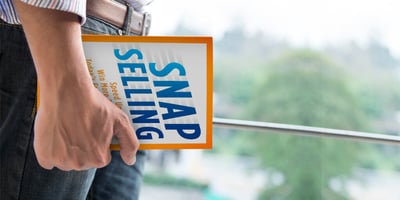
- Jill Konrath—author of SNAP Selling and Selling to Big Companies. Jill proves that the best sellers are the ones who make their buyers' crazy-busy lives easier.
- Bob Burg—co-author of The Go-Giver. If you want the "to sell is to serve" philosophy in one book, that's the one.
- Ben Gay III—sales coach to Zig Ziglar and mentored by Napoleon Hill. You won't find a more direct line to the old masters.
- Lee Salz—author of Sell Different!, on how to win more deals at the price you want without becoming a commodity.
- Andy Paul—author of Sell Without Selling Out, which is about as clear a title as you can get on doing this job with integrity.
- Justin Welsh—the sales leader who helped scale PatientPop from $5 million to $50 million in revenue before building his own solo business.
Want more? Browse the full list of guests on The Sales Podcast.
How to Wear the Title With Pride
Mark Hunter, The Sales Hunter, says, "Sales is leadership, and leadership is sales." So lead. Here's how to start today.
- Change your title back. "Account Executive," "Sales Manager," "VP of Sales." Say what you do. Buyers trust people who don't hide.
- Diagnose before you prescribe. Ask more questions than you answer. Be the doctor, not the pharmacist pushing pills.
- Walk away from bad fits. Nothing builds your confidence (or your reputation) like telling someone, "I'm not the right fit for you, but here's who is."
- Follow up like you mean it. Most deals are lost to silence, not to competitors. If you believe you can help, you owe them the follow-up.
- Keep training. Doctors, pilots, and black belts never stop drilling. Neither do the best salespeople. Read the books, listen to the podcasts, and practice.
Be Proud You're in Sales
Mary Kay Ash told her people, "Pretend that every single person you meet has a sign around his or her neck that says, 'Make me feel important.'" That's what great salespeople do every day. They make people feel important, solve real problems, and keep the whole economy moving.
That's not something to hide behind a ninja title.
It's something to be proud of.
So take the "Growth Hacker" off your LinkedIn profile. Put "Sales" back where it belongs. And the next time someone at a party asks what you do, look them in the eye and tell them the truth:
"I'm in sales. I help people."
Market like you mean it.
Now go sell something.
—Wes Schaeffer, The Sales Whisperer®